4 Dias no Algarve
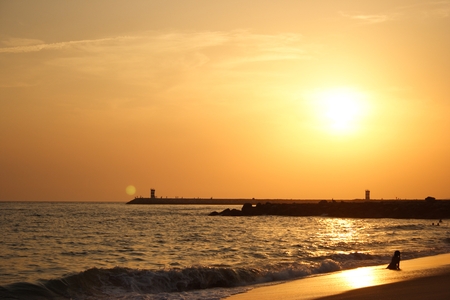
4 dias no Algarve
Nesta viagem de 4 dias vamos conhecer o que de melhor tem o algarve para oferecer.
On this 4 day trip, we are going to discover what there is best in the Algarve.
1º Dia
1st day
1st day
 Depois de uma viagem longa e uma noite bem dormida numa hostel em Vilamoura, iniciamos a nossa visita num passeio de jipe pelo interior algarvio por volta das 10.30 até ás 13h.
O percurso foi percorrido desde Vilamoura a Querença e Tôr.
Almoçamos em Loulé e aproveitamos para conhecer a cidade saida 15:30.
Vamos bater umas bolas num campo de golf em Vilamoura saida 17h.
E para finalizar o dia fomos á praia de Loulé Velho 17:30.
Jantámos num restaurante local de tapas.
After a long trip and a good night sleep in a local hostel in Vilamoura, we began our journey in a jeep safari to know the inland of the Algarve, between 10h30AM and 01:00PM.
the journey was between Vilamoura, Querença and Tôr.
We had lunch in Loulé and visited the town until 03h30PM.
We went to a local golf course in Vilamoura to practice, finnished at 05:00PM.
To finnish the day, we went for a swim in Loulé Velho beach at 05:30PM.
We had some tapas in a local restaurant for dinner.
Jantámos num restaurante local de tapas.
After a long trip and a good night sleep in a local hostel in Vilamoura, we began our journey in a jeep safari to know the inland of the Algarve, between 10h30AM and 01:00PM.
the journey was between Vilamoura, Querença and Tôr.
We had lunch in Loulé and visited the town until 03h30PM.
We went to a local golf course in Vilamoura to practice, finnished at 05:00PM.
To finnish the day, we went for a swim in Loulé Velho beach at 05:30PM.
We had some tapas in a local restaurant for dinner.
2º Dia
2nd day
2nd day
 Hoje vamos de comboio até Tavira, saida por volta das 9h e chegada 10:30.
Fomos conhecer melhor a cidade de Tavira, e na Fuzeta provar o marisco.
Na volta paramos em Faro( 15h da tarde) e fomos até á parte velha da cidade.
Ao jantar fomos comer um prato tradicional do algarve chamado cataplana.
Today we are going by trin to Tavira, we leave around 9:00AM and arrive there at 10h30AM. We visited Tavira and in Fuseta we tasted some seafood.
On the way back we stopped in Faro (03:00PM), we visited the old part of the city. In the evening we went out for a meal to taste the tipical dish cataplana.
Today we are going by trin to Tavira, we leave around 9:00AM and arrive there at 10h30AM. We visited Tavira and in Fuseta we tasted some seafood.
On the way back we stopped in Faro (03:00PM), we visited the old part of the city. In the evening we went out for a meal to taste the tipical dish cataplana.
3º Dia
3rd day
3rd day
Fomos visitar o ensino português a Loulé 10h até 12h.
Ao almoço provamos as tão faladas sardinhas.12:30 até ás 14h.
 Na parte da tarde fomos visitar a Fonte da Benémola perto de Querença e demos um mergulho na ribeira do Algibre 14:30 até ás 17h.
E ainda fomos conhecer a Nascente de Alte chamada Fonte Grande.
We wento to visit the highschool in Loulé, 10:00AM until 12 o'clock.
For lunch we tasted the famous sardines, 12h30PM until 02:00PM.
In the afternoon we went for a walk in Querença to get to know Fonte da Benémola and we had a swim in the Algibre river. 02:30PM until 05:00PM.
We still had time to visit the most tipical village in the Algarve, Alte where there is a spring called Fonte Grande.
We wento to visit the highschool in Loulé, 10:00AM until 12 o'clock.
For lunch we tasted the famous sardines, 12h30PM until 02:00PM.
In the afternoon we went for a walk in Querença to get to know Fonte da Benémola and we had a swim in the Algibre river. 02:30PM until 05:00PM.
We still had time to visit the most tipical village in the Algarve, Alte where there is a spring called Fonte Grande.

4ºDia
4th day
4th day
Acordamos cedo para ir a zona do Barlavento 8h.
Fomos de autocarro até Lagos e fomos visitar as grutas no Mar da Ponta da Piedade 11h.
Na volta passamos por Silves e visitámos o castelo e a igreja construidos com uma pedra que existe em Silves, o grês de Silves.
Por volta das 13:30 passamos pela Guia (Albufeira) para provar o famoso frango no churrasco com piri-piri.
Na volta fomos dar um mergulho na praia e fazer as malas
We woke up early, around 8:00AM to visit the west part of the Algarve (Barlavento). We went by bus until Lagos and visited Ponta da Piedade at 11:00AM.
On the way back we passed through Silves and visited the castle and the church built with an unique stone which exists in Silves, "grês de silves".
Around 01h30PM we passed though Guia to taste the famous chicken piri-piri.
When we arrived, we went for a swim at the beach and packed our suitcases.
Na volta fomos dar um mergulho na praia e fazer as malas
We woke up early, around 8:00AM to visit the west part of the Algarve (Barlavento). We went by bus until Lagos and visited Ponta da Piedade at 11:00AM.
On the way back we passed through Silves and visited the castle and the church built with an unique stone which exists in Silves, "grês de silves".
Around 01h30PM we passed though Guia to taste the famous chicken piri-piri.
When we arrived, we went for a swim at the beach and packed our suitcases.

Loulé
O Turismo é muito forte neste local pois tem lindas praias, tem muitos campos de golfe e o turismo é feito de uma forma muita agradável.
A nível arquitectónico, existem alguns monumentos a destacar. A igreja de São Lourenço dos finais do séc.XVII em Almancil com o interior coberto de azulejos e talha dourada. Em Vilamoura existem vestígios do império romano, as ruínas romanas Cerro da Vila onde existe também um museu. Na cidade de Loulé temos o castelo conquistado aos mouros por D.Sancho III em 1249. Recentemente foram também encontrados vestígios dos romanos.
Loulé is part of the Faro district, it has 20 thounsand inhabitants, Loulé has touristic places like Almancil, Vale do Lobo, Quinta do Lago, vilamoura and Quarteira.
Tourism is very strong in this area because of the beautiful beaches, golf courses and tourism is very pleasent.
In arquitecture, there are some monuments. The church of Saint Lourenço from the XVII century in Almancil, it is decorated with tiles and golden wood details. In Vilamoura there are trace elements from the Roman Inpiree, Cerro da Vila roman ruins, there is also a museum. In Loulé there is a castle conquered from the mourish people by D. Sancho III in 1249. Recently there were also found some roman trace elements.
 |
| Igreja de São Clemente - Almancil |
 |
| Castelo de Loulé |
 |
| Mercado Municipal de Loulé |
Faro
Tem cerca de 47 mil habitantes, é a capital do distrito do Algarve.
O concelho de Faro está dividido em quatro freguesias:Conceição e Estoí, Sé e São Pedro, Montenegro e Santa Bárbara de Nexe.
A cidade de Faro remonta ao séc. VIII a.c. do tempo dos fenicios, o seu nome era Ossónoba e era um dos mais importantes centros urbanos da região sul. O comércio consistia na troca de peixe, minério e produtos agrícolas. Existem vestígios de ocupação bizantina e romana. A cidade foi conquistada aos mouros em 1249 por D. Afonso III, ficando a chamar-se Santa Maria fr Faaron.
Tem vários monumentos como por exemplo a fortificação à volta da cidade velha, a Sè de Faro e a parte antiga da cidade.
O parque natural da Ria Formosa tem inicio na zona de Faro até à zona de Tavira, trata-se de um sapal, com algumas ilhas, muitas espécies de pássaros, insectos, bivalves, moluscos e cetáceos. O marisco é muito famoso nesta zona e são realizados festivais alusivos ao marisco durante o verão.
It has around 47 thousand inhabitants, it is the capital of Algarve.
The Faro area is divided by four parishes, Conceição de Faro and Estoi, Sé and São Pedro, Montenegro and Santa Bárbara de Nexe.
Faro goes back to the 13th century b.c., from the times of the phoenicians, its name was Ossónoba and it was one of the most importants urban center of the southern region. The trade consisted on the fish,ore and agricole products. There are several trace elements of the byzantine and roman occupancy. The city was conquered to the moors in 1249 by Afonso III, named as Santa Maria de Faa
ron.
In has several monuments like the fortification around the old town, the cathedral and the old part of the city.
The Ria Formosa natural park begins in the Faro area in an extension until Tavira, it is saltmarsh with some small islands, different bird species, insects, shell fish, mollusk and crabs. The seafood is very famous in this area and there are seafood festivals during summer.

- Algarve
O Algarve á a região mais meridional de todos os distritos de Portugal, tendo o Cabo de São Vicente em Sagres o ponto mais Ocidental da Europa.Tendo uma área de 5.412 km2 com cerca de 451.005 habitantes.O clima é temperado mediterrânico com Invernos amenos e Verões muito quentes e secos.
O Algarve é a região mais turística de Portugal, o clima, as suas paisagens, o património histórico, a gastronomia e a simpatia dos habitantes atraem milhões de visitantes todos os anos.
The Algarve is the most meridional region of all the Portugal districts, Cabo de São Vicente is the most Ocidental point of Europe. It has an area of 5412 square Km with approximatly 451.005 inhabitants. The climate is mediterranean seasoned with pleasent winters and very hot and dry summers.
The Algarve is the most touristic region of Portugal, the climate, landscape, historical patrimony, gastronomy and the kindness of the local people bring millions of visitants every year.
| Chaminé tipica Algarve |
 |
| Praia de São Rafael - Albufeira |
 |
| Gruta do chorino - Benagil |
Portugal
Portugal está situado na zona mais Ocidental da Peninsula Ibérica, é constituído pelo continente e arquipélagos da Madeira e Açores. Com cerca de 10.640 000 milhões de habitantes. Portugal foi ocupado por celtas, galaicos, lusitanos, germanos, suevos, visigodos e romanos, No séc. XVIII as terras foram conquistadas pelos mouros. durante a reconquista foi formado o Condado Portugalense tornando-se independente do reino da Galiza e Leão e reconhecido como Reino de Portugal em 1143. Aos poucos foram reconquistando as terras aos mouros e posteriormente nos séc. XV e XVI houve uma grande expansão devido aos Descobrimentos, Portugal expandiu o seu reino para o Brasil, África, India e Ásia. Estes territórios mais tarde reclamaram independência sendo o ultimo território ocupado na zona de África, Angola, Moçambique e Cabo Verde. Portugal viveu muitos anos em regime de ditadura e no dia 25 de Abril de 1974 deu-se a Revolução dos cravos onde se pôs fim ao regime e à guerra nas colónias de África.
A capital é Lisboa, a zona mais desenvolvida e com mais população é a zona litoral, Lisboa, Porto, Setúbal. Temos cidades muito bonitas com monumentos muito ricos devido à época dos descobrimentos, a gastronomia, as casa típicas, os costumes, o artesanato e as pessoas fazem de Portugal um pais muito acolhedor.
A nível cultural temos alguns teatros mas mais na zona de Lisboa, o teatro de revista e o Fado são muito famosos, Nas outras regiões do pais fazem-se vários festivais, principalmente no verão, festivais de musica, feiras medievais, feiras tradicionais, romarias, festas dos santos populares concertos, etc.
A gastronomia é muito rica e variada, os enchidos, o queijo, pratos de carne e peixe, marisco, a doçaria, vinhos etc. cada zona do pais tem os seus pratos tipicos. No norte são mais os pratos de carne como o cabrito ou borrego, o leitão, porco, no litoral o peixe e marisco.
Portugal is the most ocidental country of the Iberic Peninsula, it is constituted by the continent, Madeira and Azores.With 10 000 640 inhabitants Portugal was firstly ocupied by the celtic, galicians and lusitans, germans, swabians, visigoths and romans. In the 13th century the land was ocupied by the moors, when the lusitans decided to conquer Portugal again, the Portugal kingdom was formed, becoming independent from Galiza and Leão in 1143.
During the becoming years, the territoy was conquered and in the 15th and 16th century the Discovers began. Portugal expanded its kingdom through Brasil, Africa, India and Asia. Later these territories became independent, the last ones were the ones in africa, Angola, Moçambique and Cabo Verde . Portugal lived for many years in a ditactorial regime, On the 25th of April 1974 there was the carnations revolution, from there on the regime fell down and the war in the colonies finnished.
The capital is Lisbon, the cities well developed are situated in the litoral, like Lisbon, Porto and setubal.
we have beatiful cities with lovely monuments from the Discovers time, the gastronomy, the typical houses, the people's way of living, handicraft and the local people make Portugal a very pleasnt destination.
regarding culture, there are some theaters in Lisbon, there is "Revista" theater and Fado are very famous. In the other regions of Portugal there are festivals, specially in the summer, music festivals, medieval festivals, traditional festivals, saints festivals, popular saints festivals and concerts.
The gastronomy is very rich and with a lot of variaty, the smoked sausages, cheese, meat dishes, fish, seafood, sweet desserts and also the wine. In the north there are more meat dishes, like lamb, goat, pork, suckling pig, in the litoral fish and seafood.
Portugal is the most ocidental country of the Iberic Peninsula, it is constituted by the continent, Madeira and Azores.With 10 000 640 inhabitants Portugal was firstly ocupied by the celtic, galicians and lusitans, germans, swabians, visigoths and romans. In the 13th century the land was ocupied by the moors, when the lusitans decided to conquer Portugal again, the Portugal kingdom was formed, becoming independent from Galiza and Leão in 1143.
During the becoming years, the territoy was conquered and in the 15th and 16th century the Discovers began. Portugal expanded its kingdom through Brasil, Africa, India and Asia. Later these territories became independent, the last ones were the ones in africa, Angola, Moçambique and Cabo Verde . Portugal lived for many years in a ditactorial regime, On the 25th of April 1974 there was the carnations revolution, from there on the regime fell down and the war in the colonies finnished.
The capital is Lisbon, the cities well developed are situated in the litoral, like Lisbon, Porto and setubal.
we have beatiful cities with lovely monuments from the Discovers time, the gastronomy, the typical houses, the people's way of living, handicraft and the local people make Portugal a very pleasnt destination.
regarding culture, there are some theaters in Lisbon, there is "Revista" theater and Fado are very famous. In the other regions of Portugal there are festivals, specially in the summer, music festivals, medieval festivals, traditional festivals, saints festivals, popular saints festivals and concerts.
The gastronomy is very rich and with a lot of variaty, the smoked sausages, cheese, meat dishes, fish, seafood, sweet desserts and also the wine. In the north there are more meat dishes, like lamb, goat, pork, suckling pig, in the litoral fish and seafood.
O que levar na mala?
What did you bring on your luggage?
What did you bring on your luggage?
Eu levaria um telemóvel que é muito importante para a comunicação, roupa, alguma comida, Mp3, PSVita para me distrair, um pente, uma bolsinha com coisas para a higiene, phones(auriculares), 2 ou 3 pares de sapatilhas,
In my luggage, I would bring a mobile phone which very important to comunicate, clothes, some food, my MP3, psvita to enjoy myself, a hair brush, a purse with my personal products, headphones, 2 or 3 pairs of snickers.


Comentários
Enviar um comentário